QR Menu Baku – 2026 Practical Guide and Review
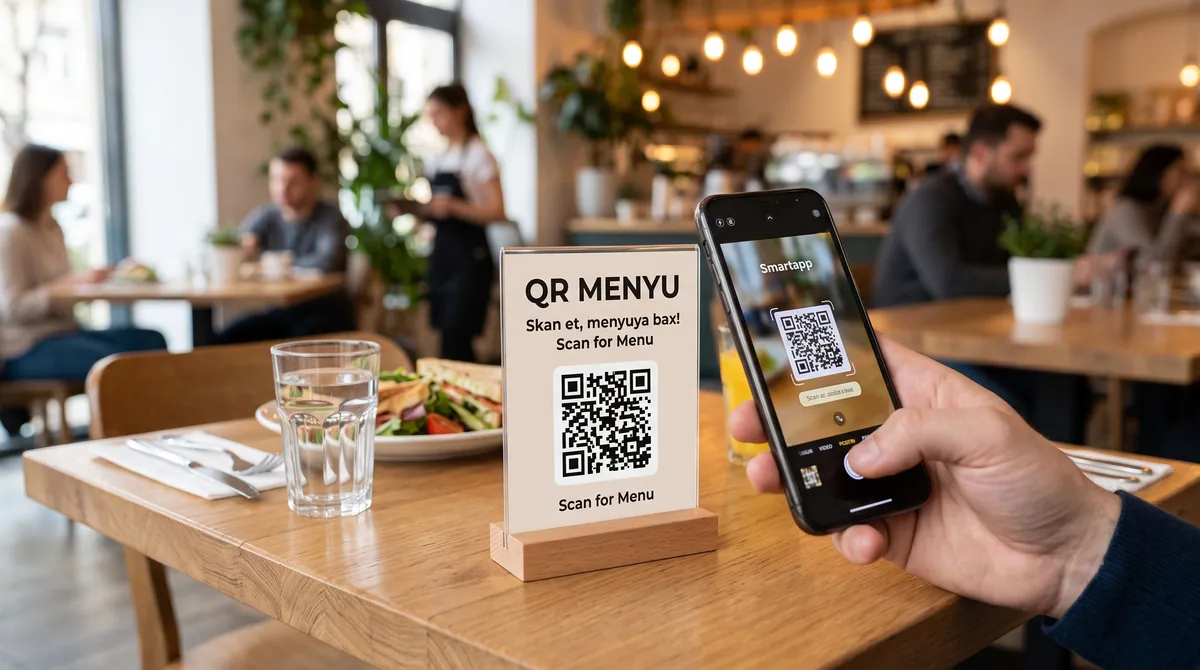
QR Menu Baku & QR Menu AZ & Menu QR – 2026 Unified Guide and Analysis
Baku's restaurant, cafe, and hospitality sector is experiencing the fastest phase of digital transformation in recent years. As customer expectations evolve, abandoning traditional paper menus has become a necessity, not a luxury, for business owners. At this point, the concept of QR menu Baku emerges not merely as a technological trend but as an integral part of daily operations. Meanwhile, the QR menu AZ approach drives the formation of unified standards across the country, while menu QR and menu QR code form the technical foundation of this process. At the heart of it all lies the concept of the electronic menu – the restaurant's first digital touchpoint with the customer.
This unified guide is designed for both small cafes just starting out and multi-branch restaurant chains. The goal is not just to describe technology but to connect it with real business scenarios, price comparisons, and practical steps.
QR Menu Baku: Realities and Expectations of the Baku Market
The Baku restaurant market has its own unique characteristics. In tourist areas in the city center (Nizami Street, around the Boulevard, Icherisheher), the density of foreign guests increases the importance of multilingual support for QR menu Baku solutions. On the other hand, the local customer segment demands speed, clarity, and mobile convenience.
Key advantages of implementing QR menu Baku in Baku:
Fast updates: Price changes, seasonal dishes, or "sold out" status spread to all tables within seconds.
Multilingual presentation: Offering the same menu in Azerbaijani, Russian, and English increases sales in tourist-heavy locations.
Hygienic impression: Especially after the pandemic, customers are wary of shared physical menus.
Reduced operational burden: Waitstaff can dedicate more time to taking orders.
Approximately 60% of restaurants operating in Baku have transitioned to at least one digital menu solution by the end of 2026. This figure will increase further in 2027.
For entrepreneurs planning to open a new venue, the article Full Procedures and Tips for Opening a New Restaurant in Baku (2026) explains legal and operational steps in detail. Planning the integration of QR menu Baku from day one as part of these steps eliminates future system change costs.
QR Menu AZ: A Unified Approach at the National Level
The concept of QR menu AZ is not just a domain extension – it is a set of solutions adapted to the Azerbaijani market, responding to local language, currency, tax, and business logic. For restaurants operating in the regions (Ganja, Sumgayit, Guba, Lankaran), the QR menu AZ solution offers several practical advantages:
Local support and training: Technical support in Azerbaijani, instructions for waitstaff in their native language.
Local payment integration: Compatibility with national payment systems.
Compliance with tax and fiscal requirements: Integration with e-invoice and other government requirements.
Adaptation to mobile network realities: In some regions, internet speeds are low, making lightweight, offline-capable solutions critically important.
What is the difference between an electronic menu and QR menu AZ?
These two terms are often confused. In reality:
Electronic menu – is a broad concept; any digital menu presented via tablet, touch screen, web page, or mobile app falls into this category.
QR menu AZ – is a subcategory of electronic menu specifically opened via QR code and adapted to the Azerbaijani market.
So every QR menu AZ is an electronic menu, but not every electronic menu has to work with a QR code.
Menu QR and Menu QR Code: The Technical Foundation
Menu QR – is the general name for the process of presenting a restaurant menu via QR code. Menu QR code is the specific technical element of this process – the square matrix code that the customer scans with their phone.
How does a menu QR code work?
The restaurant creates a unique or general menu QR code for each table.
The customer scans the code with their phone camera.
The browser automatically opens the menu page – no app download required.
The customer browses dishes, sees prices, and sometimes orders directly.
Technical recommendations for creating a proper menu QR code:
The code size should be at least 3x3 cm so the phone camera can read it easily.
Sufficient white space (quiet zone) should be left around the code.
The code should be high-contrast (white code on black background does not work).
The code should direct to a static URL so that when the menu changes, the code does not need to be reprinted.
The most common mistake: printing a new QR code every time the menu is updated. The correct approach – create a fixed URL once, change the content in the background.
Electronic Menu: Not Just a Digital List
An electronic menu is not just a digital version of dish names and prices. In the modern approach, it becomes the center of the restaurant's marketing, operations, and analytics.
Real business value of an electronic menu
Sales increase: Professional food photos, descriptions, and "most ordered" labels can increase the average check by 15-25%.
Inventory control: "Sold out" marks are placed in real time, waitstaff do not take unnecessary orders.
Customer behavior analysis: Which dishes are viewed, which are ordered – this data is worth gold for marketing decisions.
Food-cost control: When each dish's cost is linked to the menu, profit margins can be tracked in real time.
In this regard, the electronic menu should integrate with the restaurant's entire digital ecosystem – POS system, inventory module, marketing tools. An isolated menu solution does not provide enough value to the business in the long term.
Comparison Table: Which Solution Suits You?
Feature | Paper Menu | Simple PDF Menu | Static Web Menu | Integrated Electronic Menu (SmartApp) |
|---|---|---|---|---|
Update speed | Hours/days | Hours | Minutes | Seconds |
Multilingual | Separate print | Separate file | Manual | Automatic |
Inventory integration | No | No | No | Yes |
Food-cost control | No | No | No | Yes |
Analytics | No | No | Weak | Full |
Offline operation | Yes | Yes | No | Yes (cloud POS) |
E-invoice integration | No | No | No | Yes |
When internet goes down | Works | Works | Stops | Works seamlessly |
Monthly cost | Printing cost | Minimal | Hosting | Medium (with functionality) |
As the table shows, simply creating a menu QR code is not enough. True value emerges where the menu connects with the restaurant's other systems.
Practical Guide: Implementing QR Menu Baku in 7 Steps
Prepare the menu structure: Categories, dish names, descriptions, prices, allergens. Professional photography makes a big difference at this stage.
Choose a technology platform: Choose a solution that is integrated with inventory, POS, and analytics, not just a static page.
Plan multilingualism: At least Azerbaijani, Russian, and English.
Create and print QR codes: Choose separate codes for each table or a general code – according to your business model.
Train waitstaff: Staff should be able to explain the menu easily when customers ask.
Collect customer feedback: During the first 2 weeks, evaluate customers' ease of using the menu.
Optimize: Based on analytics, highlight popular dishes, re-present poorly selling items.
If you read these steps together with the article Restaurant Software – 2026 Practical Guide and Review, you will get a roadmap for building a complete digital ecosystem.
Real Business Scenario: A 40-Seat Cafe in Baku
Suppose you are opening a 40-seat cafe in Baku's Narimanov district. Your monthly expenses are:
Paper menu printing: ~150-300 AZN per update
Extra time waitstaff spend taking orders: 2-3 hours daily
Inventory loss (due to not marking "sold out" in time): 5-8% monthly
Switching to a QR menu Baku solution:
Menu update cost: 0 AZN (digital)
Waitstaff time: focused on order taking, sales increase
Inventory loss: drops to 1-2% with real-time control
Average check: increases by 15-20% thanks to professional images
These figures show that menu QR is not just about "looking modern" but a decision directly affecting profit. To strengthen the marketing side of your cafe business, be sure to review the article Cafe Business Marketing Strategies for 2026: Practical Steps.
QR Menu AZ Experience with SmartApp
The SmartApp platform is a solution fully covering the QR menu AZ concept, designed for the local market. Its main advantages:
Cloud POS system: All branches managed from a single panel.
Seamless offline operation: Even when the internet goes down, the POS and menu continue to work – critical for the frequent network issues in Baku.
Inventory and food-cost control: Each dish's cost is calculated in real time.
E-invoice integration: Full compliance with tax requirements.
Live analytics: Sales, customer behavior, and profit indicators on one screen.
Through the SmartApp Business Panel, a restaurant owner can update the menu, change prices, and monitor inventory from anywhere. System access is only via login – registration is done through the SmartApp Registration page.
Frequently Asked Questions (FAQ)
1. What technological infrastructure is required for QR menu Baku?
The main requirement is a stable internet connection and a properly prepared menu QR code. However, professional solutions (e.g., SmartApp) should have offline mode support so that even when the internet goes down, the menu and POS continue to work. Additionally, an optimized web page or app is required for fast opening of the menu on mobile devices.
2. Can a menu QR code be printed once and then changed?
Yes, if the code directs to a static URL. In this case, you simply change the menu content in the background, and the code remains the same. If you create a new code with each update, this is the wrong approach and creates additional printing costs.
3. Can an electronic menu completely replace a paper menu?
Technically yes, but in practice a hybrid approach is more effective. For elderly customers or guests less familiar with technology, it is advisable to keep a few paper menus on hand. However, the main menu should be an electronic menu so you can fully benefit from updates, analytics, and integration capabilities.
4. What is the price of a QR menu AZ solution?
The price depends on functionality. A simple static menu QR solution can range from 10-30 AZN per month, but this approach does not provide inventory, food-cost, and analytics capabilities. Fully integrated solutions (including POS, inventory, e-invoice, analytics) range from 100-300 AZN per month. The size of the restaurant and number of branches directly affect this price.
5. How is registration done in SmartApp?
Registration is done only through the SmartApp Registration page. There is no registration at the SmartApp Business Panel address – only system login is available there. For those seeking additional income opportunities, the SmartApp Partnership Program is also available.
Conclusion: In 2026, QR Menu Baku is No Longer a Choice, It's a Standard
The Baku restaurant market is rapidly digitalizing. QR menu Baku, QR menu AZ, menu QR, menu QR code, and electronic menu – these five concepts together cover the entire chain from the restaurant's first contact with the customer to inventory management, from marketing to financial analytics. Simply creating a QR code is not enough – what matters is integrating it into the right ecosystem.
If you also want to adapt your restaurant to 2026 standards, reduce operational costs, and increase sales, now is the perfect time to take action.
👉 Register through the SmartApp Registration page and implement the QR menu AZ solution in your business. 👉 For system access and management, use the SmartApp Business Panel. 👉 For additional income and partnership opportunities, check out the SmartApp Partnership Program.
The digital future is already here – you just need to welcome it with the right tools.
Share
Reviews
No approved reviews yet.
Related articles
 starFeaturedBusiness Tips
SmartApp Partner Program: Earn Up to 30% | Restaurants & Gaming Halls
Join SmartApp's partner program and earn up to 30% commission. Ideal for restaurants and game halls looking to boost revenue with a reliable partner.
 starFeaturedHow to Use
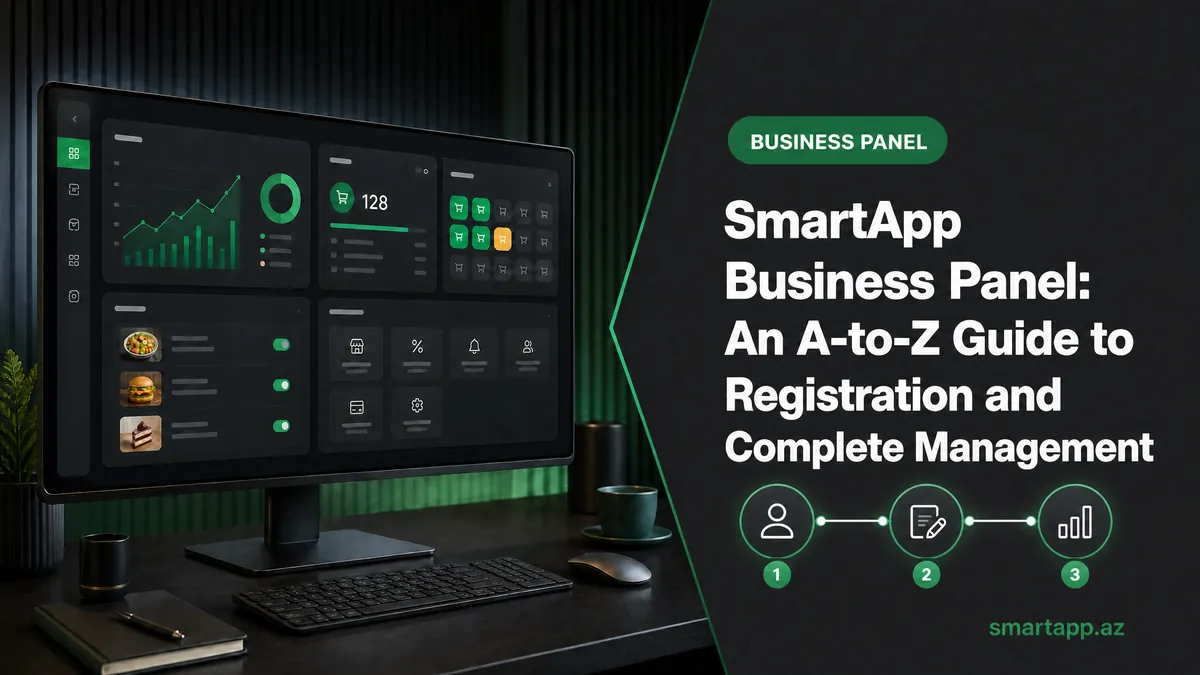
SmartApp Business Panel: A-to-Z Registration and Full Management Guide
Step-by-step illustrated guide covering everything from registering on the SmartApp.az system to managing tables, menus, QR orders, cash register, and staff.
 starFeaturedHow to Use
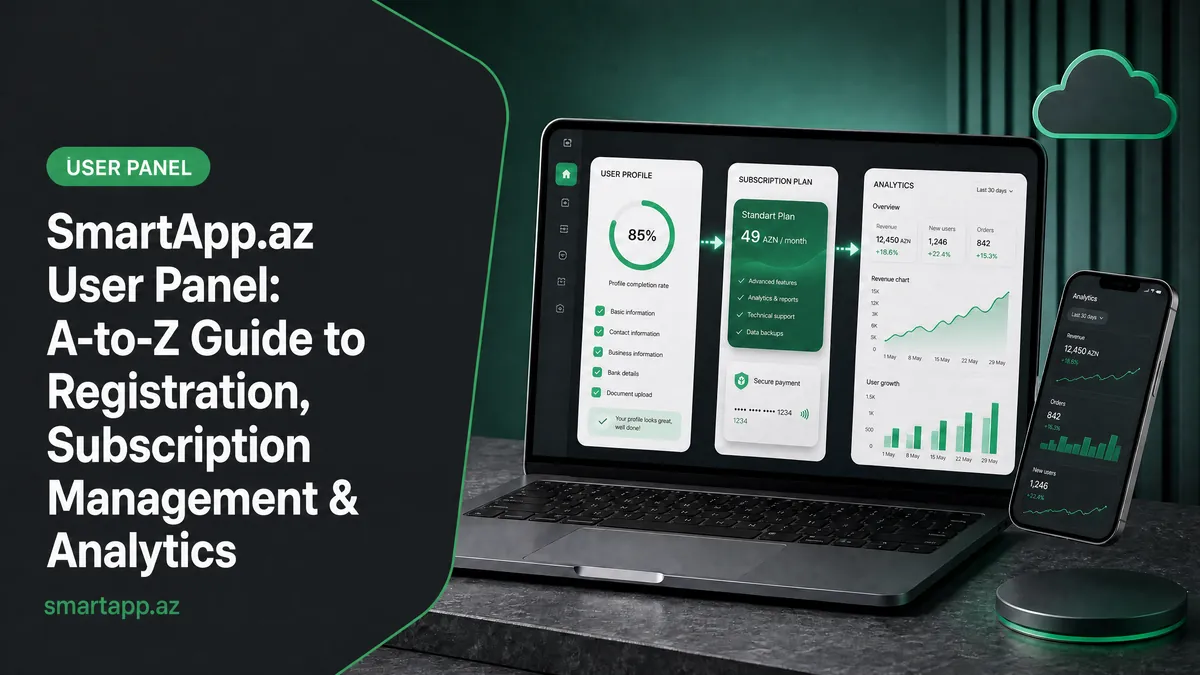
SmartApp.az User Panel: A to Z Guide for Registration, Subscription Management, and Analytics
A complete guide to the SmartApp.az user panel, covering everything from logging in, choosing subscription plans, payments, invoices, sales analytics, and location settings.