
Restaurant POS System – 2026 Practical Guide and Review
Restaurant POS System – 2026 Practical Guide and Review
In the modern restaurant business, success is not measured solely by delicious food and good service. Accurate daily sales tracking, inventory management, financial reporting, and customer satisfaction are directly tied to the restaurant POS system you use. In 2026, POS solutions for restaurants in the Azerbaijani market are rapidly changing: there is a shift from paper bills to fully digital, cloud-based, and AI-powered platforms. This guide explains in a practical way what to pay attention to when choosing a restaurant POS system, which features are important, and how it can bring real profit to your business.
What is a restaurant POS system and why is it important?
A restaurant POS system is a software and hardware complex that unifies all financial and operational processes in a restaurant on a single platform. This includes order taking, billing, payment processing, inventory accounting, staff shift management, and report generation.
A simple calculator or a device that only prints receipts is no longer sufficient. In 2026, restaurants expect POS (Point of Sale) systems to provide:
Real-time sales tracking – knowing exactly what dish was sold when and how much.
Inventory and recipe management – automatic calculation of ingredients that make up each dish.
Customer loyalty – bonus cards, discounts, and personalized offers.
Financial reports – daily, weekly, and monthly income-expense analysis.
Mobile integration – ability to monitor your business from the office or home.
> In the restaurant business, the biggest loss is not theft or expenses, but lack of proper accounting. A correctly chosen POS system can reduce this loss by 20-30%.
Key features of a restaurant POS system in 2026
1. Order and table management
A modern restaurant POS system should support a visual map of tables, splitting orders (split bill), merging them, and sharing them among waiters. This increases service speed, especially during peak hours.
2. Inventory and recipe management
Ingredient consumption according to each dish's recipe should be calculated automatically. For example, when one portion of pilaf is sold, rice, meat, and spices should be automatically deducted from inventory. Without this feature, it is impossible to see real profit.
3. Payment integrations
In 2026, restaurants in Azerbaijan should support the following payment methods:
Cash payment
Bank card (POS terminal)
QR code payment
Mobile payment apps
Online ordering platforms (Wolt, Bolt Food, etc.)
4. Reports and analytics
A good system should provide you with data such as end-of-day report, sales statistics by product, employee performance, and profit margin. Without this data, business decisions are made by intuition – which is risky.
5. Staff management and security
Shift management, access levels (manager, waiter, cashier), logging of every transaction, and audit trail are important. This prevents internal fraud.
7 practical criteria when choosing a restaurant POS system
Local market compatibility – the system must comply with Azerbaijani tax legislation, e-invoice and electronic receipt requirements.
Cloud-based – data should be stored not on a local server but in a secure cloud environment. This allows access from anywhere.
Simplicity of interface – waiters and cashiers should be able to learn the system within 1-2 days. Complex systems slow down workflows.
Scalability – as the business grows, it should be possible to add new branches, new menus, and new features.
Technical support – 24/7 support service, help in Azerbaijani, and quick response time.
Pricing model – monthly subscription, one-time payment, or hybrid model. Learn about hidden costs in advance.
Integration capabilities – compatibility with accounting software, delivery platforms, and loyalty systems.
> When choosing a system, don't look only at the price. A cheap system can cost more in the long run – because lost time, incorrect reports, and employee dissatisfaction are real costs.
When should you choose a POS system when opening a restaurant?
If you are planning to open a new restaurant, you should choose a POS system at least 1-2 months before the restaurant opens. This gives time to load the menu into the system, train employees, and complete technical integrations.
To learn the full steps for opening a new restaurant in Baku, you can read our practical guide: How to Open a New Restaurant in Baku – Complete 2026 Guide.
These guides explain licensing, tax registration, leasing, and staffing issues step by step.
Menu pricing and POS system relationship
A restaurant POS system not only tracks sales – it also forms the basis of your pricing strategy. If the cost of each dish (food cost) is entered correctly in the system, you will:
See which dishes are profitable and which are not.
Be able to justify price increases or discounts accurately.
Measure the real impact of promotions.
To learn the method for correctly calculating menu prices, refer to our step-by-step guide: Restaurant Menu Pricing Calculation Method 2026 – Step‑by‑Step Guide.
Cloud-based vs. Local POS systems
In 2026, the biggest choice is between cloud-based and local (on-premise) systems.
Criteria | Cloud system | Local system |
|---|---|---|
Initial cost | Low | High |
Access | From anywhere | Only from the restaurant |
Updates | Automatic | Manual |
Internet dependency | Yes | No |
Data security | High | Medium |
For small and medium restaurants, cloud-based solutions are more cost-effective. For large chains, a hybrid model (cloud + local backup) may be the optimal choice.
Artificial intelligence and automation – 2026 trend
In 2026, a restaurant POS system doesn't just keep records – it predicts business decisions:
Sales forecast – estimates how many customers will come on which day of the week and at what time.
Inventory forecast – warns in advance when which ingredient will run out.
Dynamic pricing – provides price recommendations according to demand.
Customer behavior analysis – learns which customer likes which dish.
These features are no longer a luxury but a competitive advantage.
Smart Choice for Modern Venues: SmartApp Business Panel
Tailored specifically for restaurants, cafes, and hospitality venues, the SmartApp ecosystem equips business owners with comprehensive tools to run operations seamlessly. With the centralized SmartApp Business Panel, managers gain mission-critical advantages:
Offline-Resilient Cloud POS: Service and order taking never stop even during internet blackouts. All transactions synchronize automatically once connectivity returns.
Automated Recipe & Food-Cost Control: Real-time ingredient deductions eliminate kitchen waste, uncontrolled loss, and pilferage.
Full Fiscal & E-Invoicing Compliance: Seamless compatibility with next-gen online cash registers and official tax authority standards.
Live Remote Performance Analytics: Track real-time table turnover, waiter efficiency, and net profitability from any smartphone or tablet worldwide.
For individuals and agents seeking affiliate earnings in the hospitality sector, the SmartApp Partner Program: Earn Up to 30% | Restaurants & Gaming Halls offers lucrative recurring revenue.
5 most common mistakes when implementing a restaurant POS system
Choosing a system without analyzing business needs – every restaurant is different. Fast food and fine dining do not need the same system.
Not training employees enough – no matter how good the system is, if the user doesn't know how to use it, it's useless.
Not entering inventory data correctly – wrong recipe = wrong report.
Lack of a backup plan – what happens when the internet goes down? Offline mode is important.
Not updating regularly – software is a living organism, it must be updated.
> A POS system is not a one-time tool – it is a living system that grows with the business.
Frequently Asked Questions (FAQ)
How much does a restaurant POS system cost?
The price depends on features and the size of the restaurant. For small restaurants, the monthly subscription ranges from 50-200 AZN. For large chains, individual pricing is offered.
Is a cloud-based POS system secure?
Yes, with proper encryption and authentication, cloud systems are more secure than local servers. Data is automatically backed up and the risk of loss is minimized.
Should a POS system comply with tax legislation?
Absolutely. For restaurants operating in Azerbaijan, the system must be fully integrated with e-invoice and new-generation online cash registers (NKA) and fully meet the requirements of the State Tax Service.
Does a POS system work when the internet is down?
Yes, reliable restaurant POS systems operate seamlessly in offline mode. When the internet is restored, all sales and inventory data are automatically synchronized with the central server.
Conclusion and Recommendations
In 2026, choosing the right restaurant POS system is not merely a technical decision; it is a strategic investment that directly drives profitability and customer satisfaction. Select the most optimal solution tailored to your operational scale, offline durability, and fiscal compliance.
To eliminate operational bottlenecks, reduce inventory loss, and establish effortless control over your operations, explore SmartApp and sign up on the SmartApp Registration page to test the system today. Active venues can log in and manage their business directly through the SmartApp Business Panel.
Share
Reviews
No approved reviews yet.
Related articles
 starFeaturedBusiness Tips
SmartApp Partner Program: Earn Up to 30% | Restaurants & Gaming Halls
Join SmartApp's partner program and earn up to 30% commission. Ideal for restaurants and game halls looking to boost revenue with a reliable partner.
 starFeaturedHow to Use
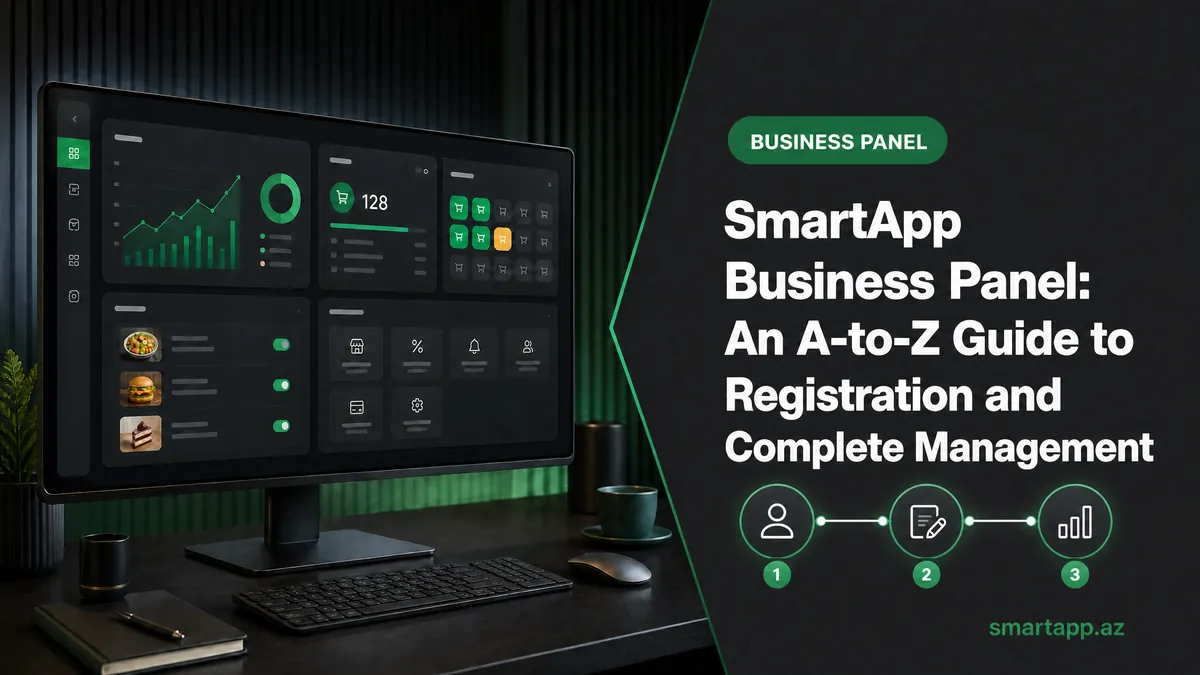
SmartApp Business Panel: A-to-Z Registration and Full Management Guide
Step-by-step illustrated guide covering everything from registering on the SmartApp.az system to managing tables, menus, QR orders, cash register, and staff.
 starFeaturedHow to Use
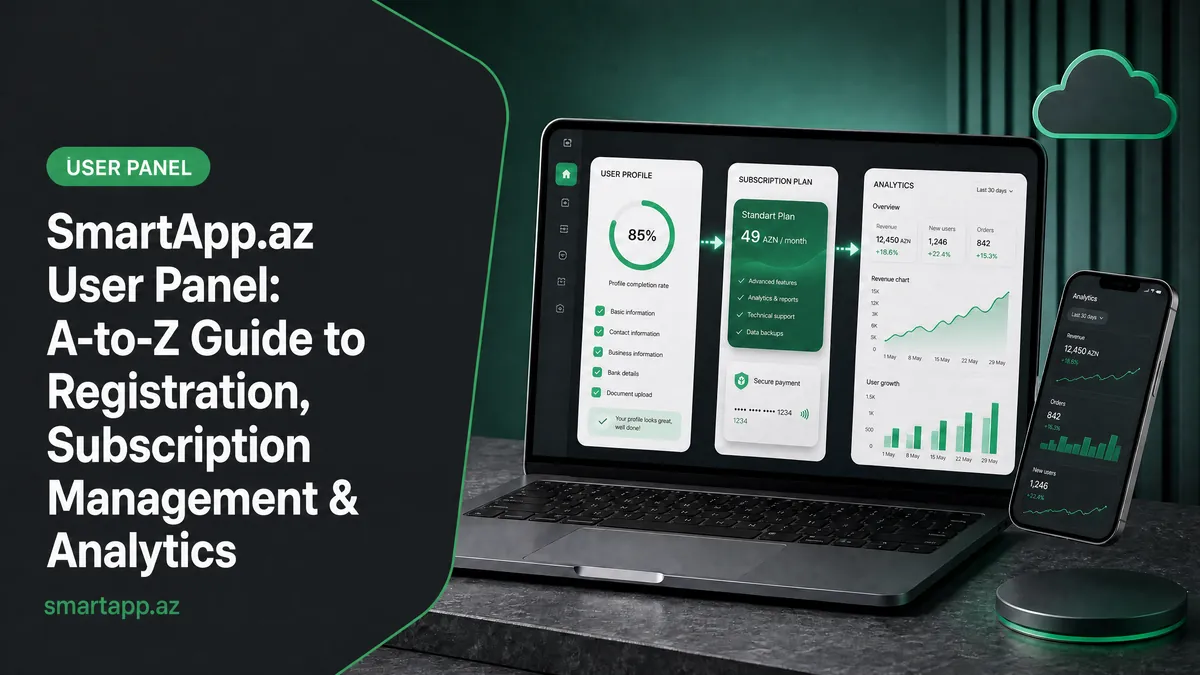
SmartApp.az User Panel: A to Z Guide for Registration, Subscription Management, and Analytics
A complete guide to the SmartApp.az user panel, covering everything from logging in, choosing subscription plans, payments, invoices, sales analytics, and location settings.